When we formulate a cosmetic, we usually begin with a very human question:
What will this ingredient do for the skin?
But for rinse-off products, there is another question that matters just as much:
What happens after it leaves the skin?
Shampoos, shower gels and hand washes are designed to be used with water. After use, their ingredients enter wastewater systems and may ultimately reach the wider aquatic environment.
At The Today Project, this is why our assessment of selected formulas goes beyond human cosmetic safety.
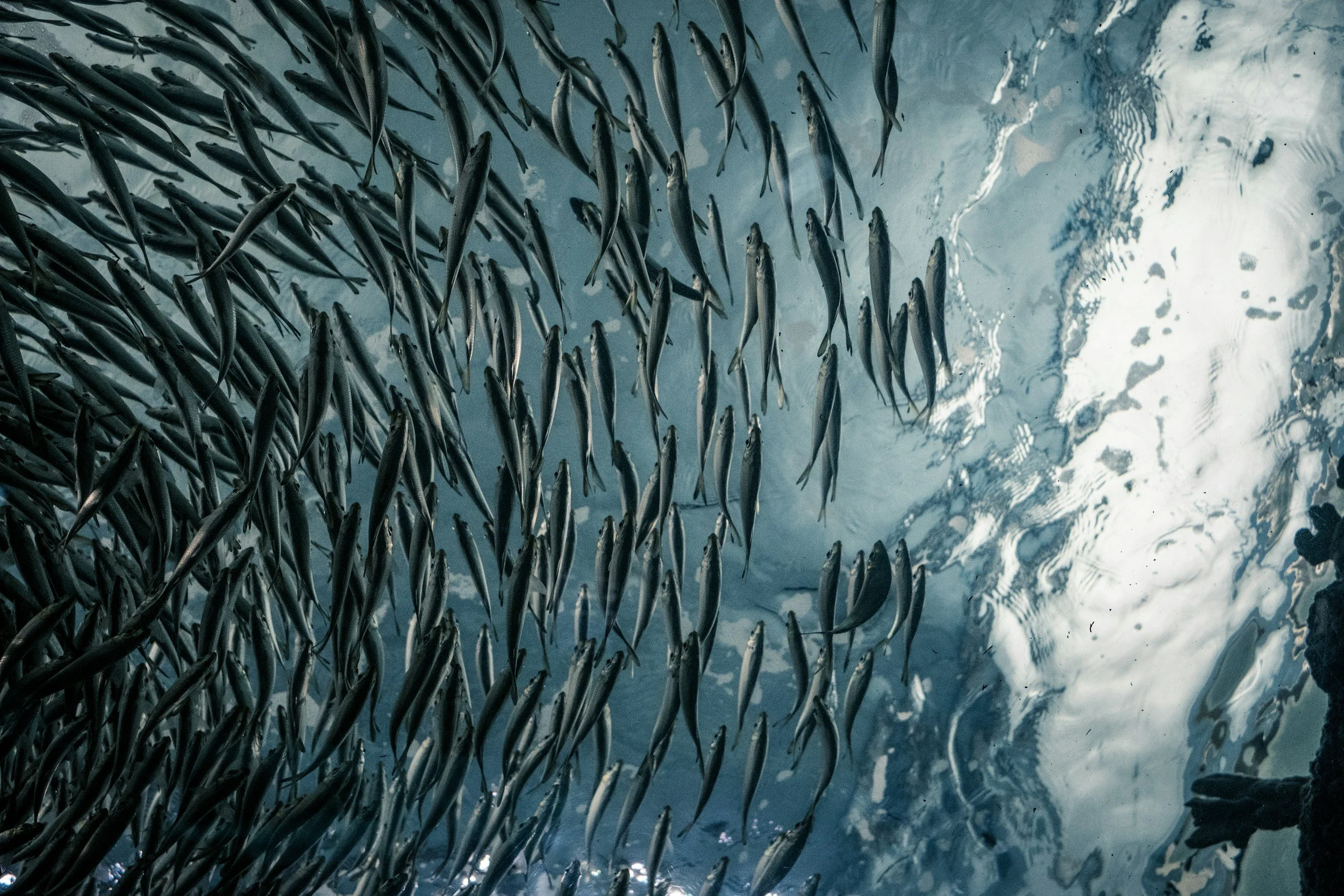
Haz We also look at their environmental profile: how biodegradable their ingredients are and what the available scientific data tell us about their potential effects on aquatic organisms.
This means looking not only at coral reefs, but at a much broader ecosystem that includes fish, aquatic invertebrates, algae and microorganisms.
Because environmental responsibility should not stop at what happens inside the bottle.
It should also consider what happens after the product goes down the drain.que se destaqueera en la que cuentes tu historia en línea puede marcar la diferencia.
Cosmetic safety and environmental safety are two different questions
Every cosmetic placed on the European market must undergo a safety assessment to determine whether it is safe for people under its intended conditions of use.
But human safety does not automatically tell us what happens in the environment.
A substance can be safe at the concentration used on human skin while still having properties that need to be considered when it reaches aquatic ecosystems.
The environmental assessment commissioned for our Shampoo, Hand & Shower Gel makes precisely this distinction: a product assessed as safe for humans does not automatically guarantee that it is harmless to the aquatic environment.
So we need to ask different questions.
Does the ingredient biodegrade?
At what concentrations have effects on aquatic organisms been observed?
What happens to fish?
What about aquatic invertebrates?
Algae?
Microorganisms?
And what does the available evidence tell us when we consider the formula as a whole?
We start with the complete quantitative formula
As with our biodegradability calculations, the process begins with something very simple but essential:
the actual formula.
Not merely the INCI list printed on the packaging.
The quantitative composition tells the assessor exactly which ingredients are present and at what concentrations.
The independent environmental assessment of our Shampoo, Hand & Shower Gel then considers available environmental information for those individual ingredients.
This is important because environmental assessment cannot be reduced to counting “good” and “bad” ingredients.
Concentration matters.
The properties of the individual substances matter.
And the quality and type of environmental data available for each substance matter.
First question: will the ingredients biodegrade?
One part of understanding environmental impact is determining what happens to ingredients after they enter the environment.
This is biodegradability.
For our Shampoo, Hand & Shower Gel, an independent laboratory evaluated the quantitative formula ingredient by ingredient using defined biodegradability criteria.
The resulting degree of biodegradability was: 96.75%
We explain exactly how that percentage is calculated in our article How We Calculate Cosmetic Biodegradability at The Today Project.
But biodegradability is only one part of the story.
An ingredient may eventually biodegrade and still interact with aquatic organisms before that degradation occurs.
So we need another type of information.
The next question is ecotoxicity
Aquatic ecotoxicology looks at the potential effects of substances on organisms living in aquatic environments.
For the assessment of our Shampoo, Hand & Shower Gel, available ecotoxicological information was reviewed ingredient by ingredient.
The report draws on information available through ECHA and examines evidence concerning several types of aquatic organisms.
These include:
Fish
Fish studies can help determine concentrations at which adverse effects or mortality have been observed.
Aquatic invertebrates
Organisms such as Daphnia are commonly used to investigate potential effects on aquatic invertebrate populations.
Algae
Algal studies help evaluate effects on growth and other endpoints in primary producers — organisms that sit at the base of aquatic food systems.
Aquatic microorganisms
Microorganisms also matter. They play an essential role in biological processes, including those occurring in wastewater treatment.
So when we talk about aquatic environmental impact, we are talking about something much broader than coral.
We are considering different levels of an aquatic ecosystem.
What do LC50, EC50 and NOEC mean?
Environmental assessments contain terminology that can look intimidating.
Three measurements appear frequently in ecotoxicological data.
LC50 — Lethal Concentration 50
The concentration of a substance associated with mortality in 50% of the test organisms under defined experimental conditions.
EC50 — Effect Concentration 50
The concentration associated with a specified effect in 50% of the test population.
NOEC — No Observed Effect Concentration
The highest tested concentration at which the study reports no observed effect for the endpoint being evaluated.
The independent assessment of our Shampoo, Hand & Shower Gel includes this type of information for several ingredients and different aquatic organisms.
These numbers are not consumer-facing scores.
They are pieces of scientific evidence used to understand the environmental profile of individual substances.
A real example from our formula
Take Sodium C14-16 Olefin Sulfonate, one of the cleansing ingredients in our Shampoo, Hand & Shower Gel.
The assessment reviewed available short-term aquatic toxicity information relating to invertebrates, algae and fish, together with longer-term information and data concerning aquatic microorganisms.
The report includes LC50 and EC50 values for different species, a NOEC from a reproduction study with Daphnia magna, and an activated-sludge respiration inhibition test performed according to OECD Guideline 209.
The purpose of mentioning this is not to overwhelm consumers with laboratory numbers.
It is to explain what sits behind our environmental assessment.
We are not asking:
“Does this ingredient sound natural?”
We are asking:
“What does the available environmental evidence tell us about this ingredient?”
That is a very different question.
Not every ingredient has the same amount of data
Scientific evidence is rarely perfectly symmetrical.
Some cosmetic ingredients have extensive biodegradation and aquatic toxicity datasets.
Others have considerably less information available.
For some botanical ingredients in our formula, for example, the assessment records that the majority of company notifications submitted to ECHA did not classify hazards.
For other substances, much more detailed aquatic toxicity information is available.
This distinction matters.
We do not believe that missing information should automatically be transformed into a reassuring environmental claim.
Different levels of evidence should remain different levels of evidence.
So where does “Coral reef friendly” fit into this?
This is where the terminology can become confusing.
The independent report commissioned for our Shampoo, Hand & Shower Gel is formally a Coral Reef Safety Assessment.
But its methodology does not consist of simply exposing coral to the finished cosmetic.
Instead, it considers several elements of environmental performance, including the formulation itself, biodegradability and available ecotoxicological information.
It also establishes specific formulation criteria.
The methodology identifies a series of substances that are not compatible with its Reef Friendly criteria, including certain UV filters such as Oxybenzone, Octinoxate, Octocrylene and Homosalate.
It also excludes categories including parabens, phthalates, triclosan, microplastics and nanomaterials.
The formula is therefore evaluated against these criteria in addition to the wider environmental information.
Coral reef friendly is a conclusion, not the entire assessment
This distinction is important to us.
“Coral reef friendly” is not how we describe the entire environmental evaluation.
It is a conclusion reached within a broader assessment.
For our Shampoo, Hand & Shower Gel, the independent assessment considered the information supplied about the formula together with the biodegradability and ecotoxicological evidence and concluded that the product can be declared:
Coral reef friendly
That does not mean that the finished shampoo was directly tested on living coral.
And we think that distinction should be communicated clearly.
The conclusion derives from the methodology and evidence considered in the assessment.
Biodegradability and aquatic ecotoxicity answer different questions
This is perhaps the most useful way to understand the whole process.
BIODEGRADABILITY
asks:
What happens to the substance over time? Can biological processes break it down?
AQUATIC ECOTOXICITY
asks:
What effects can the substance have on aquatic organisms at the concentrations studied?
CORAL REEF FRIENDLY ASSESSMENT
then considers this environmental information alongside specific formulation criteria to determine whether the product meets the methodology used for that conclusion.
One measurement cannot replace the others.
A high biodegradability percentage alone does not demonstrate an absence of aquatic effects.
And the absence of one controversial ingredient does not, by itself, describe the environmental behaviour of an entire cosmetic formula.
Environmental impact is more complex than a blacklist.
Why this matters particularly for hotel amenities
Scale changes everything.
A bottle of shower gel used in one home may seem insignificant.
A hotel can have hundreds of rooms, thousands of guests and substantial annual consumption of shampoo, shower gel, hand wash, conditioner and body care.
And these products share one important characteristic:
they are designed to be rinsed away with water.
This is why our approach to hotel amenities at The Today Project looks at environmental impact from several directions.
We think about packaging, which is why we develop refillable systems designed to dramatically reduce the amount of disposable packaging required.
We think about biodegradability, which is why we calculate it from the quantitative formula rather than assuming that natural origin equals biodegradability.
And we think about aquatic environmental impact, which is why available ecotoxicological data form part of the environmental assessment of selected formulas.
The bottle, the formula and what happens after use are not separate design problems.
They are parts of the same system.
From “natural” to measurable
The beauty industry has spent years using words such as:
Natural.
Clean.
Green.
Eco.
But none of these words, by itself, tells us what happens when a cosmetic ingredient reaches water.
At The Today Project, we prefer questions that can lead to evidence.
What is actually in the formula?
At what concentration?
How biodegradable are its ingredients?
What does the available evidence tell us about their effects on aquatic organisms?
Which substances have we chosen not to formulate with?
And what evidence supports the environmental claims we ultimately communicate?
These questions are more complicated than simply putting a green symbol on a bottle.
But we believe they lead to better formulation.
And better communication.
Formulated with knowledge. Evaluated beyond the skin.
A cosmetic formula has a life before it reaches our skin.
And it has a life after it leaves it.
At The Today Project, we want to understand both.
That means considering ingredient origin and function.
But it also means looking at biodegradability, available aquatic ecotoxicological evidence and the environmental criteria relevant to the finished formula.
Because the environmental impact of cosmetics is not just about coral reefs.
It is about the aquatic ecosystem as a whole.
And responsible formulation begins by recognising that everything we rinse away goes somewhere.