

PACKAGING DESIGNED TO BE KEPT AND REFILLED
We design primary containers for continued use where compatible refills are available, minimise unnecessary secondary packaging and describe bottle bodies, pumps, labels, coatings and refill pouches separately.

OUR SYSTEM: REFILL BY DESIGN
Refillability is a design principle, but it is also a specific product claim. We use it only where a compatible refill is offered or supplied for the named product or hotel system. Durable aluminium and glass containers are paired with lighter refill formats so the primary container does not need to be replaced with every purchase.

Use. Refill. Repeat
OUR PACKAGING PRINCIPLES
At The Today Project, packaging is not just a container — it’s a reflection of our values. Every decision we make is grounded in environmental responsibility, material transparency, and long-term functionality.
-
We evaluate each packaging component according to product protection, hygiene, repeated use, material weight and available collection routes. We avoid decorative layers and secondary components that do not serve a clear function.
-
Our aluminium, resin and glass primary containers are intended to be retained when a compatible refill is available. Pumps, labels, coatings and seals are separate components and may require different materials and disposal routes.
-
Plastic is still used in some pumps, liners, coatings and refill pouches where it supports product safety, hygiene or performance. We identify these components instead of describing the complete product as plastic-free.
-
Where a box, sleeve or wrap is needed for protection, transport or mandatory information, we favour uncoated paper-based formats designed for paper collection where suitable local systems exist. Lamination, plastic film and decorative foil are avoided unless technically required.
-
We do not describe packaging as zero waste or inherently low impact. Where a reduction is claimed, we state the reference system, functional unit, included components, method and date.

WHY WE LIMIT CONVENTIONAL PLASTIC
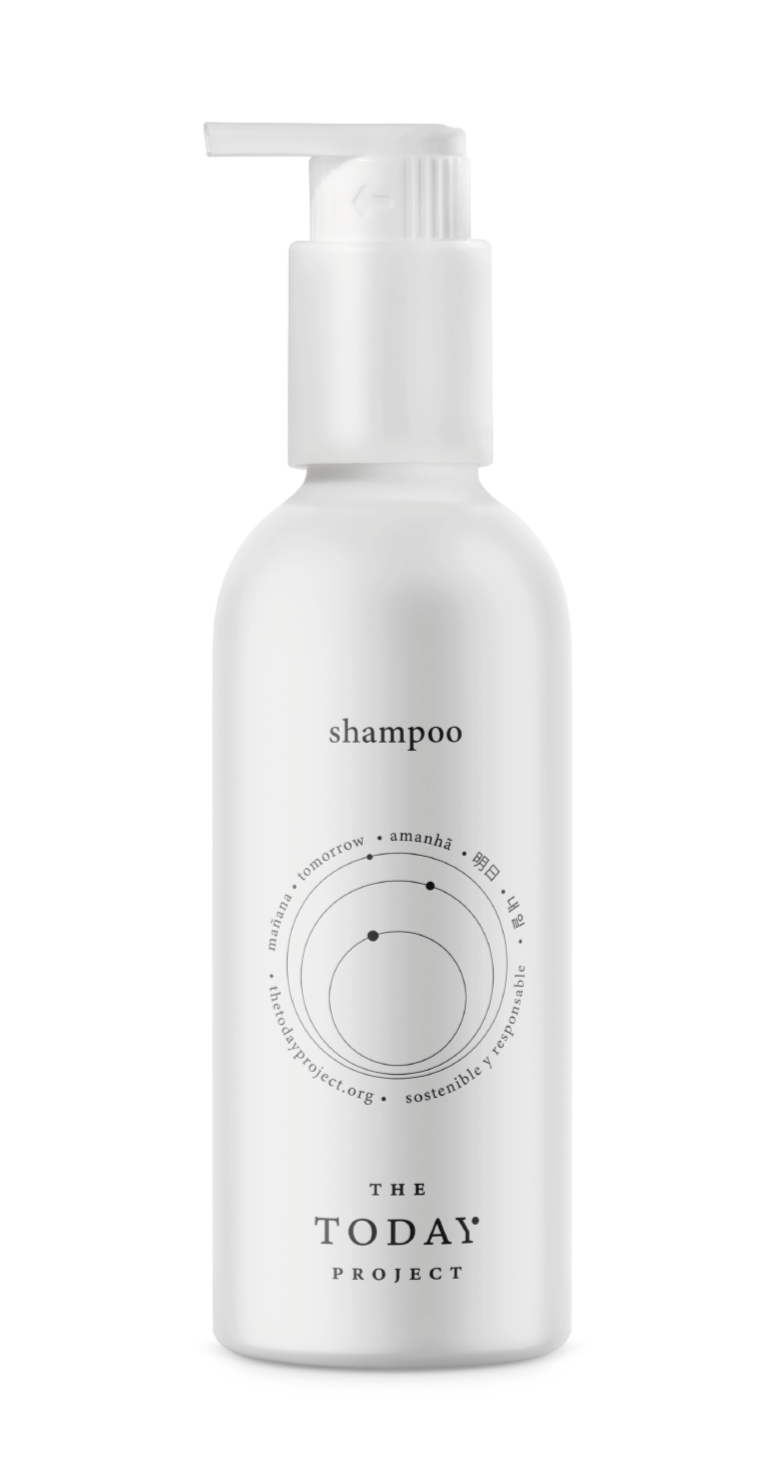
Plastic is durable and valuable, but many small, mixed-material or highly decorated packaging formats are difficult to collect and recover effectively.
That is why we avoid conventional plastic wherever possible, simplify components and use refill formats to reduce the number of primary containers required.
Complete elimination is not always technically possible: Plastic is still used in some pumps, liners, internal coatings and refill pouches where it supports product safety, hygiene or performance. We identify these components instead of describing the complete product as plastic-free.
Aluminium provides effective formula protection and can enter established metal-recycling streams where suitable collection is available. Our bottle bodies are designed first for repeated use and then for material recovery. Post-consumer recycled content varies by bottle format and is stated in the relevant product or technical documentation; pumps, labels and internal coatings are excluded unless expressly included.
WHY WE CHOOSE ALUMINIUM

REFILLABLE ALUMINIUM BOTTLES
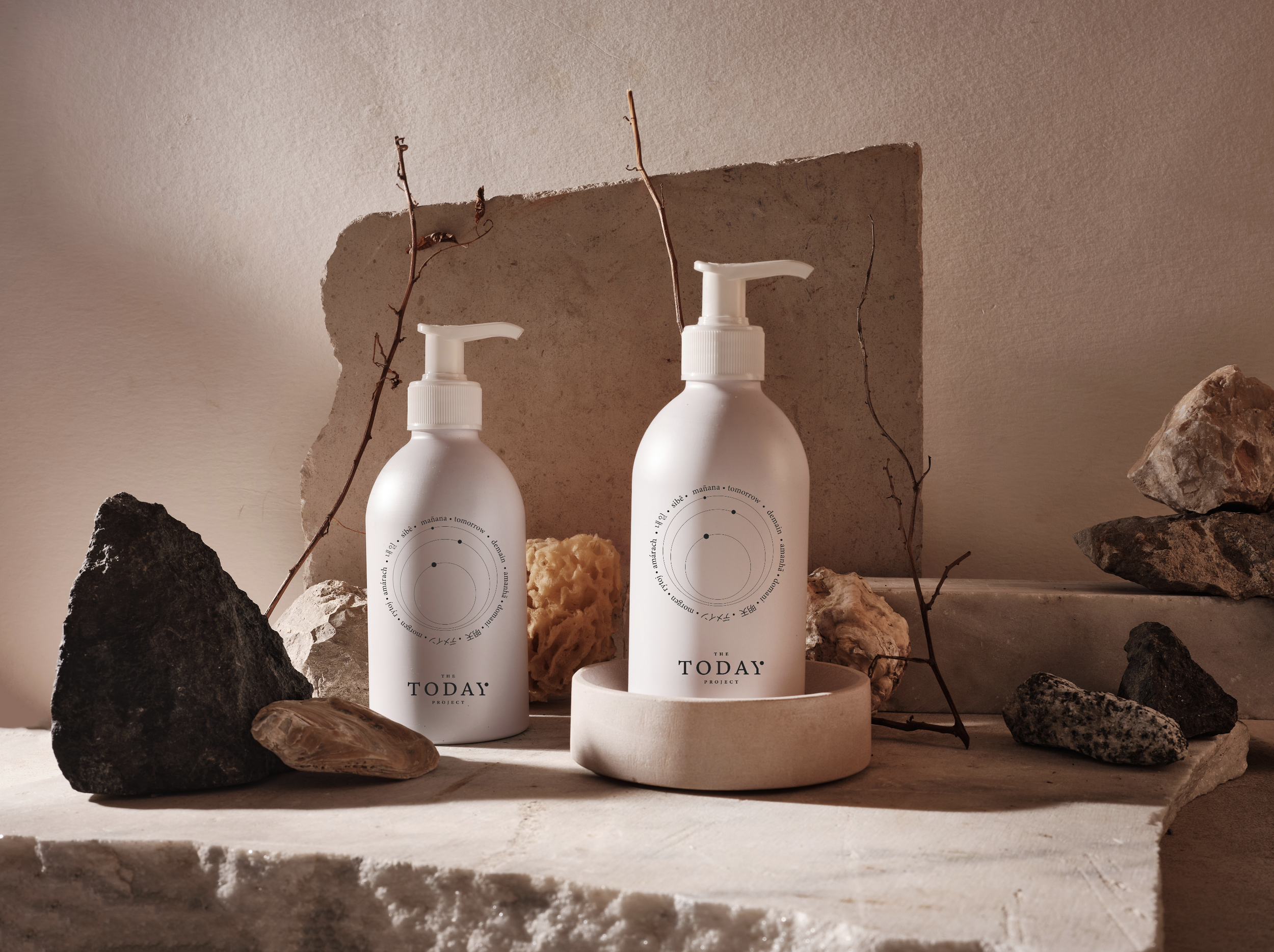
Our refillable aluminium bottle bodies are protected by a BPA-free internal coating and intended for repeated use with compatible formulas. Recycled-aluminium content varies by format and is documented separately. Pumps, labels and internal coatings are not aluminium and are excluded from any recycled-content percentage unless expressly stated.
LIGHTER REFILL FORMATS
Our 5 L refill pouch supplies multiple bottle refills while keeping the primary aluminium bottles and pumps in use. The pouch contains plastic. Quantified packaging reductions are published only for configurations covered by a documented comparison of bottle, pump, label, coating and pouch weights.
THE BENEFITS OF USING REFILL SYSTEMS
-
Refilling keeps the durable primary bottle in use for longer, reducing the need to produce a new bottle with every purchase.
-
Our refill formats are lighter and more compact than the equivalent number of individual bottles, reducing packaging weight and transport volume.
-
A concentrated refill format replaces several smaller containers with a single, more material-efficient pack.
THE REFILL LOGIC
HOW TO REFILL
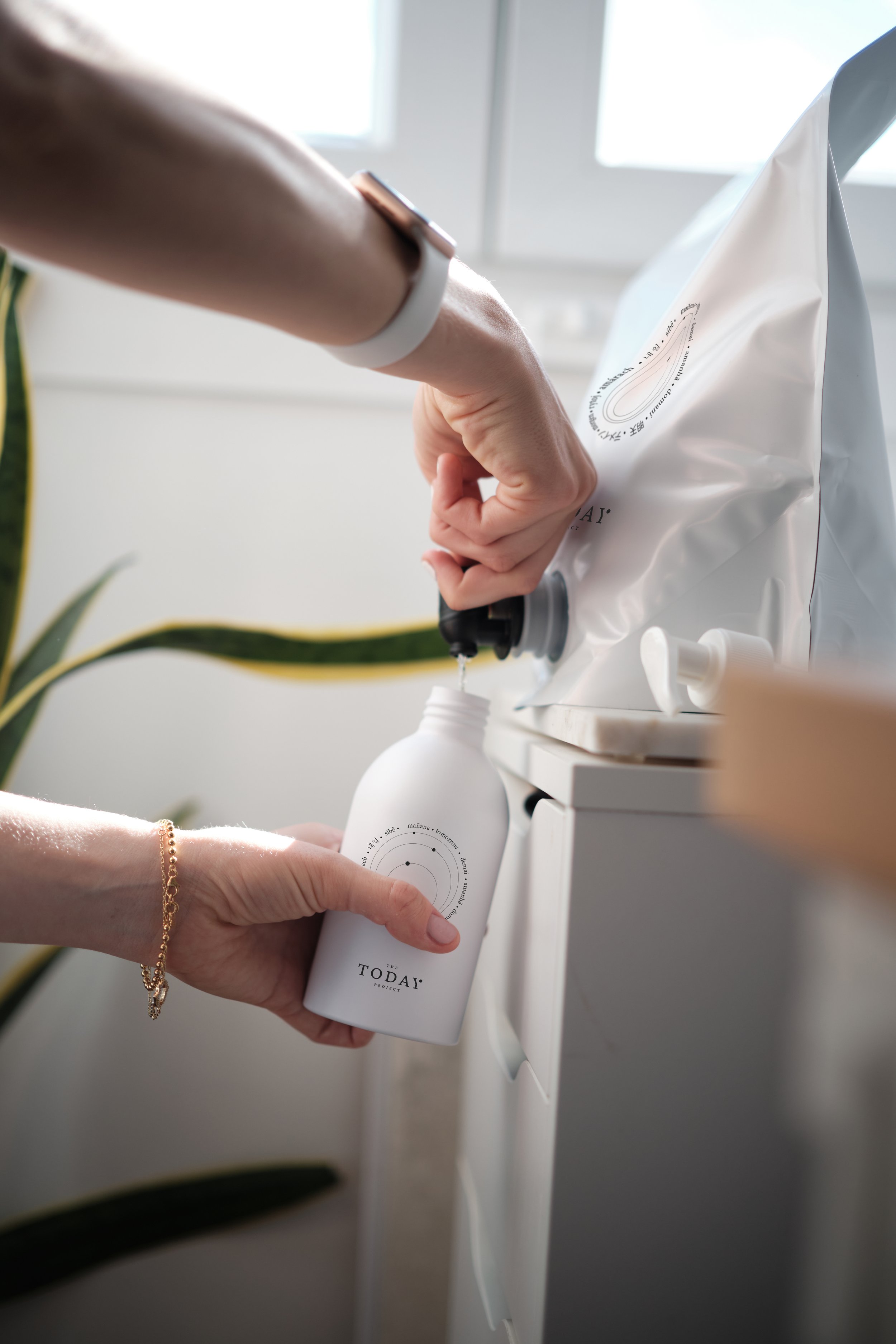
Refilling is simple:
Remove the protective seals from the refill pouch.
Press the dispenser on your main container.
Pour the formula in slowly.
For thicker textures, you might need to squeeze, twist or press the pouch firmly to help the product flow.
Don’t worry — the pouch is durable and won’t break, even with strong pressure.
Refilling should feel intuitive and effortless — and once you’ve done it, you’ll never go back.
SECONDARY PACKAGING
When Less is More
When secondary packaging is necessary for protection, shipping or logistics, we apply clear criteria:
• Recycled and uncoated paper where technically possible
• No unnecessary lamination or plastic coatings
• No decorative layers without a functional purpose
• Designed for paper recycling wherever suitable collection systems exist
No luxury in unnecessary layers. If it does not serve a purpose, If it does not belong.
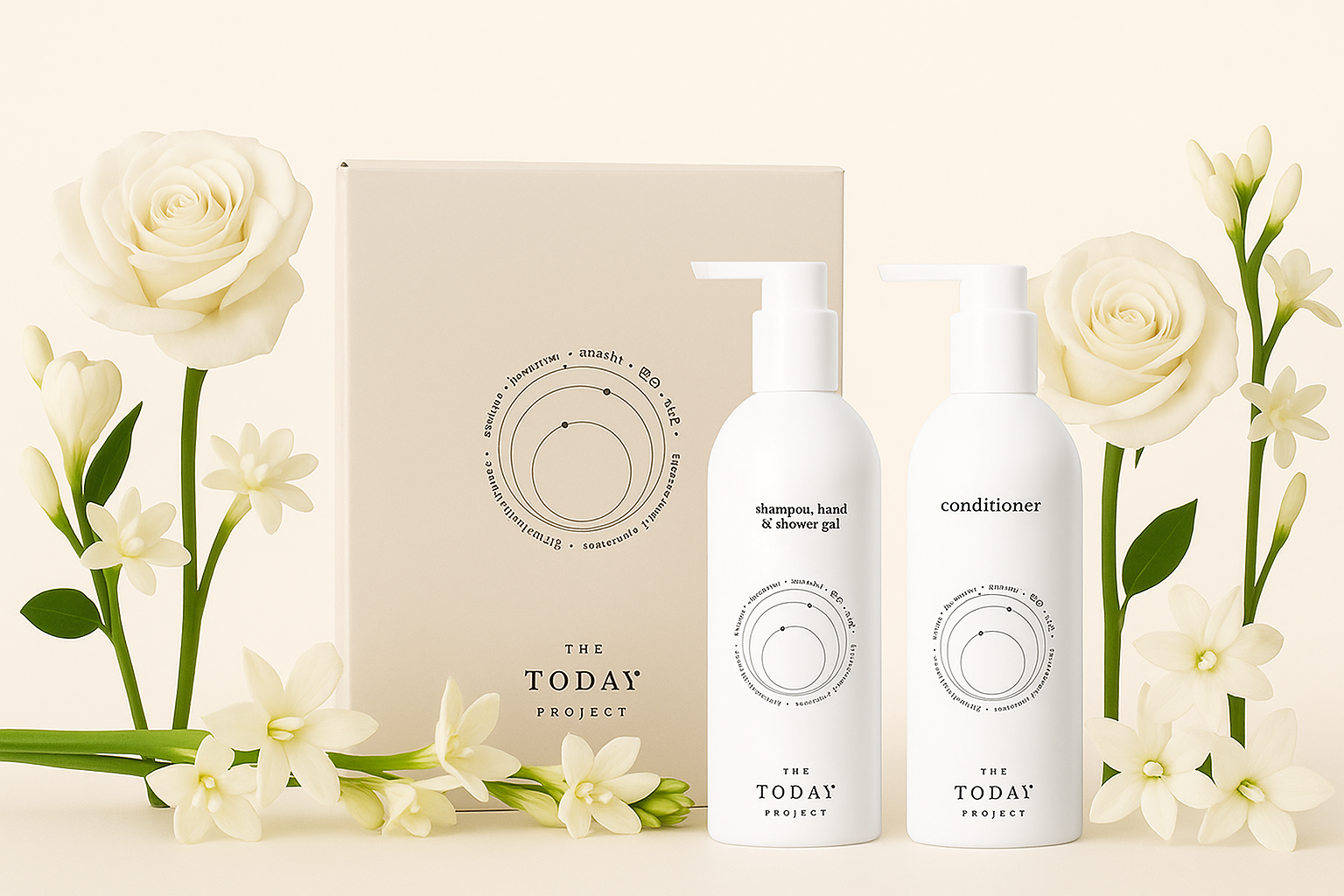
We’re not here to make packaging look luxurious — we’re here to make it matter.
Our commitment is to reduce environmental burden while elevating how you care for your skin and your space.
Because packaging isn’t just part of the product — it’s part of the future waste.
JOIN THE REFILL CULTURE